Facing Hate, Choosing Silence: Afghan Immigrants in California Speak Out
Community members describe everyday discrimination and explain why most cases remain unreported

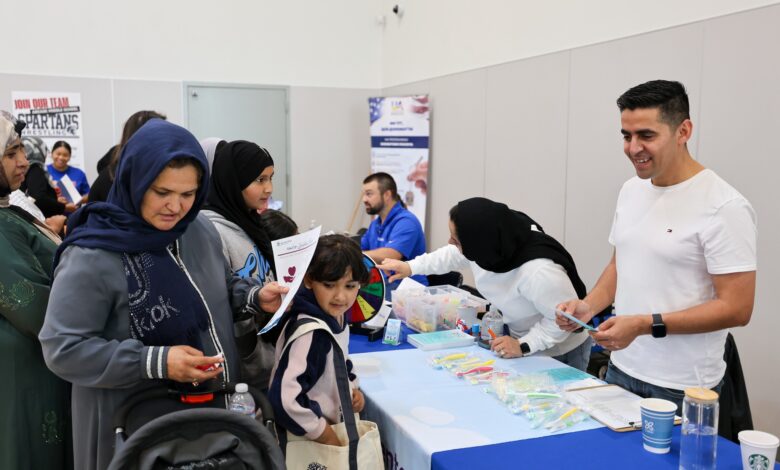
Sacramento, California—For many Afghan immigrants, arriving in the United States—particularly California—marks the beginning of a safer and more hopeful life. Yet for some, this new chapter is also shaped by experiences of discrimination and hate—incidents that often go unspoken and unreported.
An Afghan woman in Sacramento, who requested anonymity due to personal concerns, said she faced repeated hostility after starting work at a local store. “One customer told me to go back to my country,” she said. “It was painful because I was just trying to do my job.”
In San Jose, Rahman Saber, a recently arrived Afghan man, described similar experiences in the workplace. “A coworker would joke and say, ‘You all came from war,’” he said. “Maybe it was a joke to him, but to me it felt disrespectful.”
Such encounters are not limited to workplaces. An Afghan student at American River College in Sacramento said he often feels reduced to stereotypes. “When people find out I’m Afghan, they immediately ask about the Taliban or war,” he said. “It feels like that’s the only way they see me.”
Marzia Hamidi, an Afghan immigrant living in Fremont, said, “Sometimes it’s not even direct insults; it’s the way people look at you or how they avoid you once they hear where you’re from. It makes you feel like you don’t fully belong, even if no one says it openly.”
Community leaders say these experiences are not isolated. Hashamatullah Siddiqi, an Afghan community leader in Sacramento, said many Afghan immigrants—especially women and newcomers—face discrimination but lack the awareness and support needed to respond effectively.
“Various committees are working on human rights protections for the Afghan Muslim community,” Siddiqi said. “But unfortunately, many of these efforts have not been effective. People lack information and advocacy about their rights, which is why they remain silent.”
He added that discrimination affects a broad segment of the community, particularly those still adjusting to life in the United States. “Women, newcomers, and other vulnerable groups are facing hate and discrimination in different environments,” he said.
Silence, Fear, and Limited Response
Despite these experiences, many Afghan immigrants choose not to report incidents of hate or discrimination.
“Most people prefer to stay silent,” Siddiqi said. “Some do report cases, especially in workplaces or schools, but often they feel that no real action is taken. That discourages others from speaking out.”
He emphasized that limited awareness and advocacy are key factors. “There needs to be more information-sharing and training so people understand their rights,” he said. “Without that, silence will continue.”
Frozan Nikzad, an Afghan community ambassador with the City of Sacramento and a nonprofit director, echoed similar concerns.
“When our community faces discrimination and hate incidents, unfortunately, they prefer to remain silent rather than report it,” she said. “There are several reasons—fear, lack of awareness, language barriers, lack of trust, and most importantly, immigration status.”
Nikzad noted that discrimination against Afghan and Muslim communities has persisted for decades, with periodic increases during times of heightened tension. “For more than two decades, discrimination and hate incidents have been reported in the United States,” she said. “After major national or political events, these incidents tend to increase.”
She added that many cases occur in everyday settings. “We are seeing reports especially from schools, where students face bullying, and in broader society, where individuals are targeted because of their race, religion, or wearing hijab,” she said.
Experts and community leaders point to several factors behind underreporting: fear of jeopardizing immigration status, lack of trust in institutions, and limited access to information in native languages such as Dari and Pashto.
Siddiqi stressed that building trust is essential to addressing the issue. “Trust is one of the biggest challenges,” he said. “There is a perception of inequality and lack of inclusion. That is why many immigrants choose silence. To change this, we need stronger advocacy programs and better engagement with the community.”
At the state level, programs such as CA vs Hate offer confidential, multilingual support for victims of hate. However, awareness of these resources remains limited within Afghan communities.
Community leaders say addressing hate requires more than services—it requires trust, culturally informed outreach, and sustained engagement. Until then, many experiences of discrimination may continue to go unheard, even as Afghan immigrants work to build new lives in California.
This story was produced as part of the American Community Media – CA vs Hate Fellowship.